After Kill Process on Linux It Runs Again on Another Pid
Introduction
If a Linux process becomes unresponsive or is consuming too many resources, you may demand to impale it.
Most processes have their ain methods of shutting down. Unfortunately, processes tin malfunction and not permit themselves to exist close down. If a running background procedure is unresponsive, information technology becomes necessary to use a command to impale it.
Here's a complete guide on how to kill a Linux process using the control line.

What Processes Can Yous Kill in Linux?
Before killing or terminating a process, you demand to consider permissions.
A root user tin kill all processes. You lot can either add sudo before a command to run information technology as root, or obtain a root crush with su . Then execute the command.
Killing a procedure sends a termination message to the given procedure. In that location are multiple types of termination messages including:
-
SIGKILL– SIGKILL is the ultimate fashion of killing a process. Information technology volition always kill a procedure and will impale the process abruptly, generating a fatal error. SIGKILL should ever work. If it does not work, the operating system has failed. -
SIGTERM– SIGTERM attempts to kill a process, only unlike SIGKILL it may exist blocked or otherwise handled. It tin can be considered a gentler way of attempting to stop a procedure.
For nigh purposes, SIGKILL volition be the fastest and most effective method to terminate the process.
Step 1: View Running Linux Processes
The pinnacle command is the easiest way to get a consummate overview of the processes currently being run.
To view a list of all currently running processes, employ the command:
top The top command will reveal process IDs and users, in addition to the amount of retentivity and CPU ability each process is using.
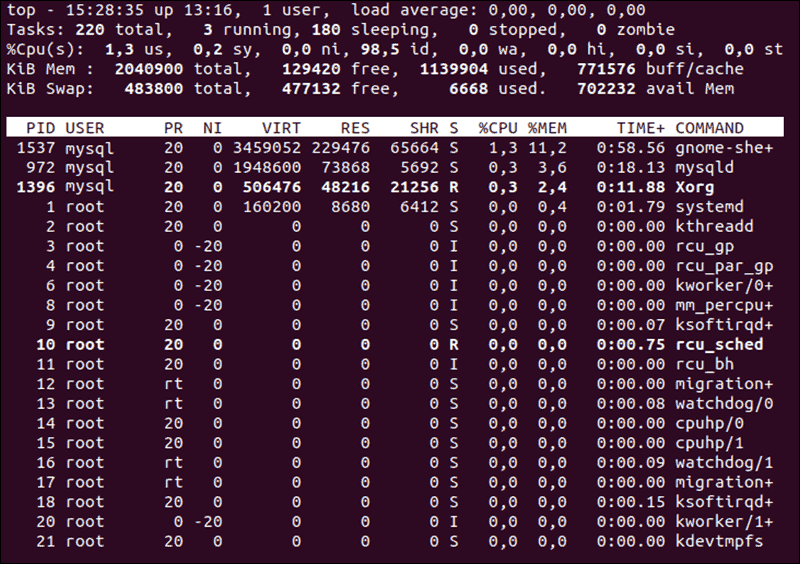
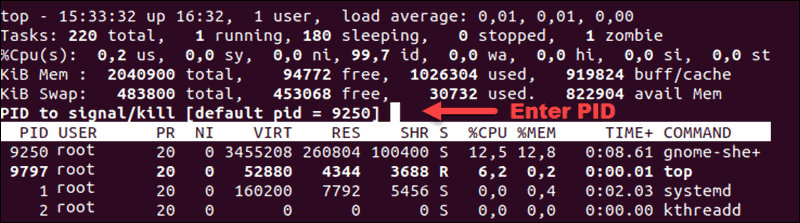
To kill processes straight from the summitinterface, press k and enter the procedure ID.
To leave the peakinterface, press q.
Step 2: Locate the Process to Kill
Before you tin can kill a procedure, y'all need to find it. There are multiple ways you tin search for a process in Linux. Processes can either be located by a process proper name (or a partial process name) or a process ID (also known equally a "pid").
Locate a Process with ps Command
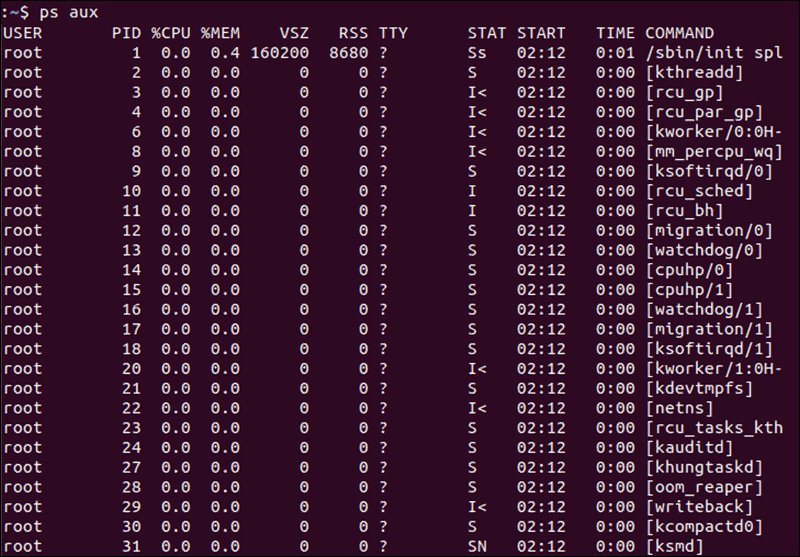
The ps control displays similar information to superlative , though it will not exist in the form of an interface. Instead, the ps command provides a complete listing of running processes, formatted based on the tags you add.
ps <options> The most common options to add to this is "-aux":
-
-a. View processes of all users rather than just the electric current user. -
-u. Provide detailed information about each of the processes -
-x. Include processes that are controlled non by users but past daemons.
For instance, the control ps -aux volition render a detailed process list of all processes.
Finding the PID with pgrep or pidof
The Linux command pgrep is a more complex way of finding a process. This command will return processes based on specific selection criteria, which is known as the pattern. The blueprint is a regular expression, such equally a* , where * would be a wildcard.
pgrep <options> <pattern> Here are the options that can be used with this control:
-
-50. List both the procedure names and the PIDs. -
-n. Return the process that is newest. -
-o. Return the process that is oldest. -
-u. Only find processes that belong to a specific user. -
-x. Only find processes that exactly friction match the given design.
The command pgrep -u root displays all processes endemic by root. The command pgrep -u root 'a*' returns processes owned past root that outset with the letter "a".
The pidof control is used to find the ID of a process, provided that you know the name of the process.
pidof <options> <program> A few options tin be included, such as:
-
-c. Only return PIDs within a single root directory. -
-o. Omit certain PIDs (include the processes to omit later on the flag). -
-s. But render a single PID. -
-10. Besides returns PIDs of shells that are running scripts.
Stride 3: Use Kill Command Options to Terminate a Process
At that place are a few different methods of killing a process in Linux, depending on whether you lot know the name of the process running, the pid of the process, or just how long the process has been running.
killall Command
The killall command is used to impale processes by proper noun. By default, it will send a SIGTERM indicate. The killall command can impale multiple processes with a single command.
killall <procedure> Several options tin be used with the killall control:
-
-e. Find an exact match for the process proper noun. -
-I. Ignore case when trying to detect the process proper noun. -
-i. Inquire for additional confirmation when killing the process. -
-u. Only impale processes owned past a specific user. -
-5. Report back on whether the process has been successfully killed.
In addition to killing processes based on name, the killall command tin can as well be used to kill based on the age of the process, using the following commands:
-
-o. Employ this flag with a elapsing to kill all processes that have been running more than that amount of time. -
-y. Utilise this flag with a elapsing to impale all processes that take been running less than that amount of fourth dimension.
The killall -o 15m control volition kill all processes that are older than 15 minutes, while the killall -y 15m command will kill all processes that are less than 15 minutes.
pkill Command
The pkill command is similar to the pgrep command, in that it volition kill a process based on the process name, in addition to other qualifying factors. By default, pkill will ship the SIGTERM indicate.
pkill <options> <pattern> pkill options include:
-
-n. Only impale the newest of the processes that are discovered. -
-o. Only kill the oldest of the processes that are discovered. -
-u. Only kill the processes that are owned by the selected user. -
-x. Merely impale the processes that match the blueprint exactly. -
-indicate. Send a specific betoken to the procedure, rather than SIGTERM.
kill Control
If you know a process ID, you can impale it with the command:
kill <processID> The kill control will impale a single process at a time with the given process ID. It will transport a SIGTERM bespeak indicating to a process to terminate. It waits for the plan to run its shutdown routine.
The -indicate command can be used to specify a indicate that isn't SIGTERM.
kill -9 Linux Command
kill -9 is a useful control when you demand to shut down an unresponsive service. Run it similarly as a regular impale control:
impale -9 <processID> Or
kill -SIGKILL <processID> The impale -9 command sends a SIGKILL signal indicating to a service to shut down immediately. An unresponsive program volition ignore a kill control, but information technology will close down whenever a kill -9 command is issued. Use this command with caution. Information technology bypasses the standard shutdown routine so any unsaved data will be lost.
Your operating arrangement is non running properly if a SIGKILL signal does not shut down a service.
pinnacle Command
The top control provides an interface through which a user can navigate through currently running processes.
acme To kill a specific process, insert k from the top interface and so enter in the desired process ID.
xkill control
The xkill control is a special type of command that closes a given server'southward connection to clients.
xkill <resource> If a server has opened a number of unwanted processes, xkill will arrest these processes.
If xkill is run without specifying a resources, then an interface will open up that lets the user select a window to shut.
Key Takeaways on Terminating a Linux Process
- When a process cannot exist airtight whatsoever other fashion, information technology can be manually killed via control line.
- To impale a procedure in Linux, you must first find the process. You can employ the
summit,ps,pidoforpgrepcommands. - In one case you have found the process you want to impale, yous can impale it with the
killall,pkill,kill,xkillorpinnaclecommands. - When killing a procedure, yous can send a termination signal of SIGHUP, SIGKILL, or SIGTERM.
- You demand to have permission to kill a process, which you can gain through the utilise of the
sudocommand.
Note: Larn how to apply the nohup command to block the SIGHUP signal and allow processes to complete even after logging out from the terminal/shell.
Decision
In this article, we covered several ways to impale processes in Linux. It is disquisitional to larn and understand these Linux termination commands for organisation management and assistants.
Was this commodity helpful?
Yes No
Source: https://phoenixnap.com/kb/how-to-kill-a-process-in-linux
0 Response to "After Kill Process on Linux It Runs Again on Another Pid"
Post a Comment